


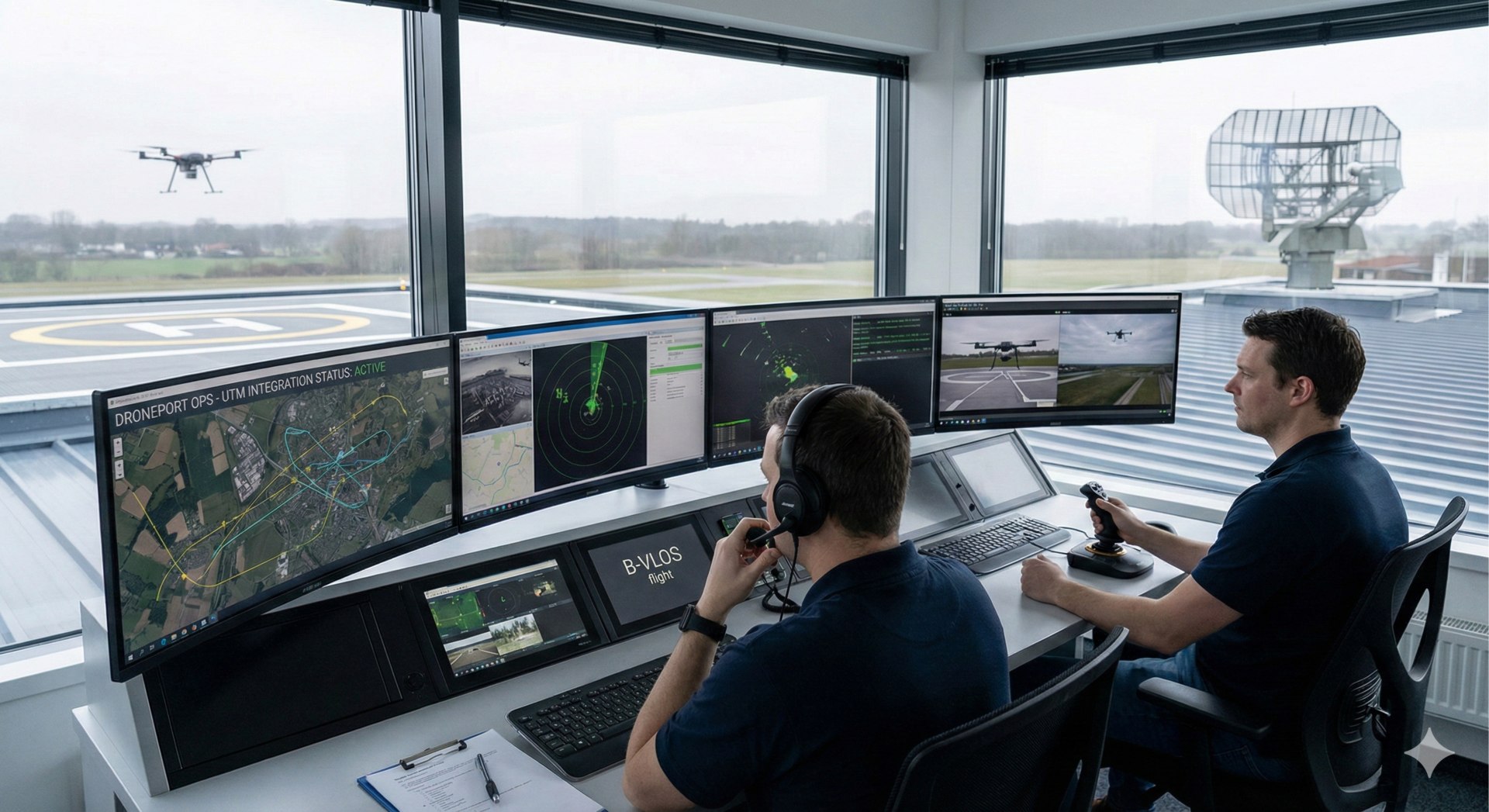
24 Feb MANNED DRONEPORTS FOR UTM INTEGRATION
Key terms:
- ATC – Air Traffic Control
- B-VLOS – Beyond Visual Line of Sight
- UAS – Unmanned Aerial Systems
- UTM – Unmanned Traffic Management
Droneport operations working with ATC involve integrating unmanned aerial systems (UAS) into controlled airspace through real time staff manning, digital management, specialized infrastructure, and strict procedural coordination to ensure safety.
Operations in controlled or segregated airspace require pre-flight planning and communication with ATC. Droneports often feature designated areas for testing and operational flights, sometimes located near traditional airports, requiring close coordination.
Droneports are utilized to monitor drone positions, status, and battery levels in real-time. This system in turn enables seamless interaction with ATC for UAS flights, by allowing Droneport and ATC operators; through co-ordination; to file flight plans, receive authorizations, and monitor relevant traffic movements.
Droneports specifically employ surveillance, radar, and anti-collision technologies to monitor all authorized and unauthorized traffic, thereby ensuring safety in the UTM and ATC airspace sector`s.
A key challenge is integrating drone operations into existing ATC systems (classes of controlled airspace). With the future of B-VLOS flights and its impact on the business and operational requirements of a demanding global society, the challenge is to ensure that Droneports become standardized as they evolve into the mechanics of air safety provision.
Example of a manned Droneport Operation:
DronePort (Belgium): Features a specialized OPS room for BVLOS applications, using a service provider for monitoring, and supporting of automated perimeter inspections.
No Comments